This session examines the legal and governance challenges that arise when life sciences companies engage in joint advocacy through trade associations, industry coalitions and collective policy initiatives. Participants will examine how companies can structure regulatory engagement and industry collaboration to support effective advocacy while implementing appropriate safeguards to prevent anti-competitive coordination.
The growth of online pharmacy platforms and sustained parallel trade across the EU has intensified pressure on pharmaceutical trademark rights, particularly where medicines are repackaged and relabelled for distribution across borders. This roundtable will explore the practical strategies companies are deploying to monitor digital marketplaces, challenge unlawful repackaging and coordinate cross-border enforcement while remaining aligned with EU principles on exhaustion and competition law.
This session will examine evolving Environmental, Social and Governance (ESG) obligations affecting the life sciences sector, including the revised Urban Waste Water Treatment Directive and its potential cost-allocation consequences for pharmaceutical manufacturers. Participants will explore the new European ESG legislation and discuss how environmental liability exposure, supply chain transparency requirements and new reporting standards are reshaping risk management frameworks and long-term operational planning across the industry.
Ongoing amendments and transitional extensions are continuing to reshape the practical implementation of the EU Medical Device Regulation (MDR) and In Vitro Diagnostic Regulation (IVDR) across the EU. This session will outline the latest updates to these legislations and explore the persisting uncertainties and challenges for legal teams managing medical device and IVD portfolios.
Managing IP ownership transfers following cross-border M&A transactions remains an underestimated challenge for many organisations, with ownership errors creating significant hidden risk across global IP portfolios. This roundtable will explore how to manage multi-jurisdictional portfolio transitions efficiently, covering best practices for reducing risk and ensuring compliance during IP ownership changes. Attendees will discuss the operational and strategic challenges in post-acquisition IP integration, and leave with a clearer picture of how to improve visibility, coordination and efficiency in global IP portfolio transitions.

Ketevan Weißflog
Senior Director, Business Development EMEA
RWS
Ketevan Weissflog, LL.M., is Senior Director, Business Development – EMEA at RWS Group, where she advises global organizations and IP law firms on cross-border portfolio transitions, strategic IP management, and complex intellectual property operations.
With more than 15 years in intellectual property, she has supported corporations and IP law firms in navigating multi-jurisdictional ownership changes, post-M&A IP integrations, and global portfolio transitions across patents, trademarks, renewals, validations, and IP recordals.
As a qualified IP lawyer, Ketevan has held several senior leadership roles in international intellectual property operations and portfolio management.
U.S. product liability continues to represent a material litigation risk for life sciences companies, with multidistrict litigation and escalating jury awards intensifying exposure. This roundtable will examine how pharmaceutical and medical device manufacturers are structuring their defence strategy in this space and mitigating against financial reputational damage.
The recent, high-profile Munich Regional Court decision on aflibercept has brought renewed focus to the application of the Doctrine of Equivalents in pharmaceutical patent disputes. The court’s reasoning has significant implications for the scope of protection available to originators and the freedom-to-operate assessments undertaken by biosimilar entrants in crowded, high-value markets. This session will examine the aflibercept decision, its interaction with established German and European equivalence case law and its potential consequences for generic launch and future pan-European injunction proceedings.
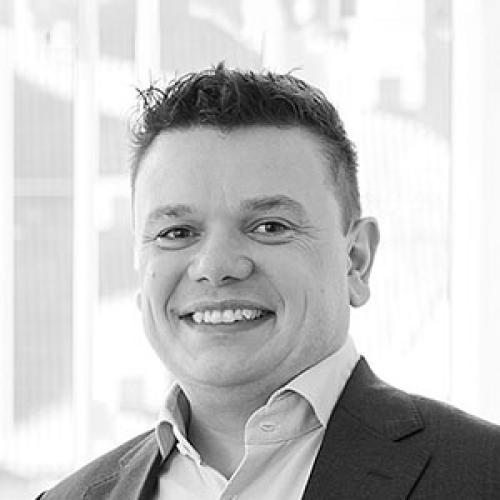
Mike Gruber
Partner
Carpmaels & Ransford
This roundtable will examine the legal and strategic implications of the EU SPC manufacturing waiver, focusing on its “safe harbour” role in enabling export and day-one EU market entry while reshaping originator exclusivity planning in the final phase of IP protection. Participants will assess notification requirements, stockpiling constraints and enforcement exposure, considering how originators and generics are adapting to core challenges and shifting strategies in response to new legislation and case law.

Aled Richards-Jones
Partner
Mewburn Ellis

Laila Beynon
Director, Dispute Resolution
Regeneron
Laila Beynon is Director, Dispute Resolution at Regeneron, responsible for the strategic co-ordination of ex-US patent litigation. She has a PhD in Biochemistry/Molecular Biology, 10 years’ private practice experience in life sciences patent litigation at Herbert Smith Freehills LLP, and prior to her role at Regeneron headed up the Patent Litigation team at BAT.
As scrutiny of inventive step and sufficiency intensifies in Europe under evolving EPO and UPC practice, originators face growing pressure to substantiate broad antibody claims with a credible technical contribution and sufficient data at the point of filing. This pressure is further reinforced post-Amgen v. Sanofi (2023) in the U.S., where the enablement doctrine has tightened the boundaries for broad antibody claims.
This session will examine the core IP challenges in the antibody and biologics space, placing recent high profile European and U.S. case law in the context of practical strategies you can deploy to secure broad and robust protection for biological molecules.
- Are broad functional antibody claims in the U.S. still defensible post-Amgen v. Sanofi (2023)?
- What impact has the landmark UPC Court of Appeal decision in Amgen v. Sanofi & Regeneron (Nov 2025) had on antibody claims in Europe?
- How is inventive step for antibodies being assessed currently by major patent offices, including USPTO, EPO, JPO and CNIPA?
- Is the presumption of obviousness of antibody inventions at the EPO justified? - How does the notion of “routine methods” impact antibody patentability?
- How much data do you need in a patent application to demonstrate inventiveness?
- Is there a middle ground between broad, functionally defined claims and narrowly defined sequence claims?
- How can you curate an antibody development and IP strategy that is adaptable to a changing prior art and reference antibody landscape?

Anish Desai
Partner
Dechert
Anish Desai is a first-chair trial lawyer who leads complex competitor life science and technology cases in federal district courts, the U.S. International Trade Commission, the U.S. Court of Appeals for the Federal Circuit, the Patent and Trial Appeal Board, and in arbitration proceedings. IAM Patent 1000 described Mr. Desai as a “smart attorney who is excellent at simplifying technical detail for judges and juries and great on his feet,” while Chambers USA notes that he “provides thoughtful, strategic advice” and “is excellent in court and a rising star; he is the next generation” in the patent litigation area.

Christoph Rehfuess
Head of IP
SOTIO Biotech

Richard Page
Partner
df-mp
Richard Page is a European Patent Attorney and a UPC Representative, specialising in life science patents. Drawing on his solid technical background as a researcher in the UK and Germany and fourteen years of IP experience, he advises clients across a broad range of life science technologies. He has particular expertise in antibody-related inventions, vaccines and second medical uses. Richard has a strong track record in opposition and appeal proceedings before the European Patent Office, and he brings his contentious insights into his drafting and prosecution work to help clients secure strategically robust and commercially valuable patent protection.

Stefanie Kies
Senior Director Intellectual Property
Polpharma Biologics

Tamaris Bucher
Principal Patent Attorney
Novartis
Tamaris is a Principal Patent Attorney at Novartis. She has gained extensive experience in pharmaceuticals in her almost ten years at Novartis, as well as from a previous role at a patent law firm in Basel.
She specialises in patent matters relating to antibody technology and cell & gene therapies. She has expertise in patent prosecution and SPC issues, as well as a keen interest in following legal developments in these areas.
Tamaris is both a registered European Patent Attorney and Swiss Patent Attorney. Additionally, she has a background in Australian patent law, having completed a Master of Industrial Property at the University of Technology, Sydney.
Once viewed as a defensive, compliance-driven function, regulatory engagement is increasingly being integrated into broader corporate strategies for long-term product protection. In the context of MFN initiatives and intensifying commercial pressures, regulatory tools are becoming an important strategic lever for shaping market entry and influencing pricing dynamics, bringing regulatory activity into closer alignment with IP, competition and commercial decision-making.
Using FDA citizen petitions as a case study, this session will examine how often underutilised regulatory mechanisms can be deployed to influence market access and shape competitive positioning, and explore how these engagement tools intersect with IP strategy and antitrust risk.
- How are companies using regulatory tools, such as FDA citizen petitions, to complement IP strategy and support long-term product protection?
- To what extent can regulatory mechanisms be deployed to influence generic market entry without crossing the line into anti-competitive conduct?
- How does the timing and sequencing of regulatory interventions dictate competitive outcomes and antitrust exposure, particularly in the context of generic and biosimilar entry?
- How do regulatory strategies that influence competitive entry translate into pricing dynamics and broader market access outcomes?
- How are regulators, courts and competition authorities assessing and responding to the use of regulatory tools, such as citizen petitions?
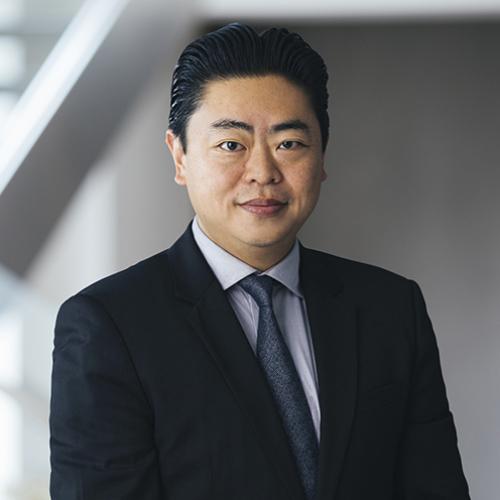
Ha Kung Wong
Partner
Venable LLP
Ha Kung Wong has over 20 years of experience practicing general intellectual property law with an emphasis on complex patent and trade secret litigation as well as IP transactions and contract negotiations for mergers, acquisitions, and collaborations in pharmaceuticals, biologics, and chemistry. Cases Mr. Wong has litigated include those related to proton pump inhibitors, allergy eye drops, anti-epileptic drugs, anti-tussive, injectable microspheres, RNAi products, and other pharmaceuticals. Mr. Wong also has extensive experience with Inter Partes Review, Post Grant Review, intellectual property counseling, pharmaceutical regulatory counseling, pre-suit investigations, licensing, and due diligence.
Mr. Wong has his BS with high distinction in Chemistry and his BS in Biochemistry from the University of Illinois Urbana-Champaign and his JD, cum laude, from the University of Notre Dame. Mr. Wong is currently an elected member of the Venable Board, is an Advisory Board Member for the Center for Biosimilars, is Treasurer, Executive Committee member, and Board Trustee for the Foundation for Advancement of Diversity in IP Law (FADIPL) and serves as faculty for the National Institute of Trial Advocacy (NITA) and Lawline.